

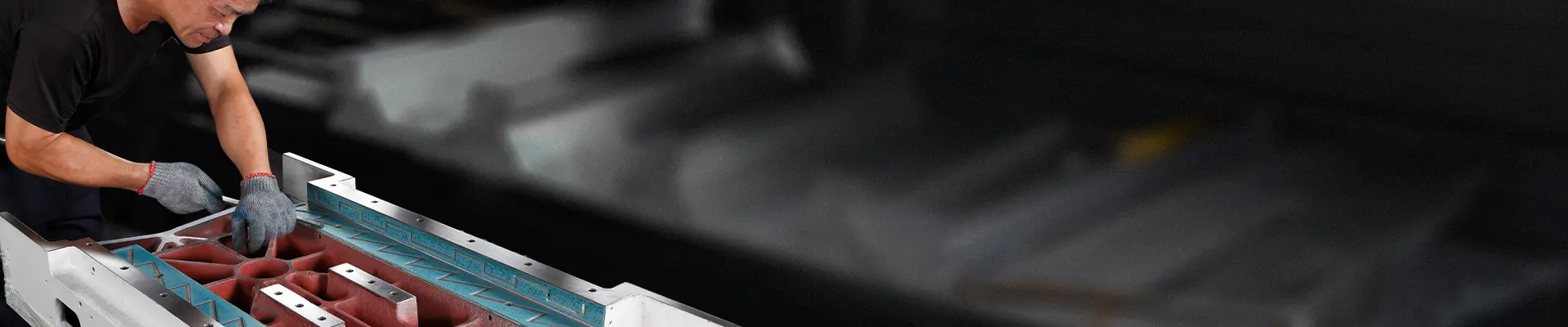
Large Component Machining: Key Considerations for Selecting a Double Column Machine

When machining large components on a standard vertical machining center, your shop may face problems such as insufficient table load capacity, limited travel range, and vibration that compromises part accuracy. That's where the double column machine comes in, making it one of the go-to equipment choices for large-part machining.
In this article, we'll walk through the challenges of large component machining, the advantages of a double column machine center, and the key factors, plus common mistakes, to keep in mind when evaluating your next equipment purchase.
Large Component Machining Challenges & The Advantages of Double Column Machines
As workpieces become larger, heavier, and more precise, a machine's rigidity, stability, and ability to handle long machining cycles can directly affect part quality:
Challenges
1. Large and Heavy Parts Require Higher Rigidity and Stability
When a workpiece stretches several meters long and weighs multiple tons, standard machining centers quickly hit their limits in table size, load capacity, or travel range. The result? Parts that can't be fully fixtured in a single setup, forcing your team into multiple repositioning operations.
On top of that, heavy workpieces generate significantly higher cutting loads. If the machine structure lacks sufficient rigidity, those cutting forces can cause frame deflection, tool vibration, or workpiece shifting, reducing accuracy and surface finish.
2. Importance of High Accuracy and Surface Finish
Many large molds, structural components, and aerospace parts require consistent flatness, perpendicularity, hole-positioning accuracy, and surface finish across a large working area. Long-travel cuts can amplify positioning errors, thermal displacement, or vibration, resulting in dimensional deviation or inconsistent surface quality.
3. Impact of Long Machining Cycles on Machine Durability and Reliability
A single large part can take anywhere from several hours to several days to machine. Throughout that time, the machine is continuously dealing with cutting loads, heat buildup, chip evacuation, and coolant circulation. If the machine isn't built to handle that kind of sustained stress, thermal displacement, accuracy drift, guideway wear, and spindle temperature rise can accumulate over time and reduce output consistency.
Advantages of Double Column Machines
1. High-Rigidity Structure Reduces Vibration and Improves Machining Accuracy
With a high-rigidity structure and two columns that help distribute machining loads, a double-column CNC machine keeps the spindle, crossbeam, and worktable in a more stable relative position during machining. This helps improve machining accuracy, surface quality, and consistency in repeat production.
2. Extended Travel and Wide Worktable Support Heavy Cutting and Large-Part Machining
Double column machines typically offer substantial table load capacity, making them well-suited for heavy molds, machine bases, energy equipment components, and large structural parts. The extended X, Y, and Z axis travel also covers a much larger machining envelope, reducing the need for multiple setups and repositioning.
Key Considerations When Selecting a Double Column Machine
Large component machining depends on workpiece weight, material, precision, cutting load, production volume, and maintenance cost. That's why selecting a double column machine center needs to start with your actual machining conditions:
1. Machine Structure and Rigidity
When machining large components, insufficient machine rigidity leads to vibration, structural deflection, and unstable accuracy. When evaluating a double-column CNC machine, check the base material, casting or welded structure quality, crossbeam design, column support method, and overall torsional rigidity.
A high-rigidity machine structure maintains stable relative positioning between the spindle, cutting tool, and workpiece during heavy cuts, reducing the risk of tool chatter and deflection.
2. Working Ranges and Axis Travel
Before purchasing, confirm your maximum workpiece dimensions: length, width, height, and weight, and then match those against the machine's X, Y, and Z axis travel, table size, and maximum load capacity.
Feed rate and rapid traverse speed are also worth paying attention to, as they have a direct impact on overall machining efficiency. A machine that maintains stability during long-travel moves and offers solid feed control can meaningfully cut down on non-cutting time and boost throughput.
3. Spindle and Tool Performance
Different materials and machining types call for different spindle power, speed, and torque requirements. If your work is primarily heavy cutting in steel, cast iron, or alloy steel, prioritize low-speed high-torque output and spindle rigidity. If you're machining aluminum, complex mold surfaces, or finishing passes, then higher spindle speeds and smooth, stable running performance matter more.
It's also worth noting that large components typically require a variety of tools to complete milling, drilling, boring, tapping, and finishing operations. If the tool magazine capacity isn't sufficient, operators end up doing frequent manual tool changes, which adds downtime and increases the chance of tool management errors.
4. Control System and Automation
The CNC control system directly affects positioning accuracy, multi-axis coordination, and operating efficiency. Long-travel positioning, contour machining, multi-axis synchronization, and toolpath stability are all critical in large component machining. It also needs reliable data processing capability and precise servo control.
If efficiency and consistent quality are priorities, it is worth evaluating features such as automatic tool changing, automatic measurement, tool length compensation, workpiece probing, collision detection, and machining data feedback. These capabilities can reduce the time spent on manual setup and calibration, lower the risk of operator error, and make machining conditions easier to monitor and trace.
If your operation plans to introduce automated production lines in the future, make sure the machine can integrate with automation systems so future expansion is not limited.
5. Machining Efficiency and Maintenance Considerations
When evaluating a machine, look beyond the initial purchase price and factor in material removal rate, tool change time, chip evacuation efficiency, coolant system performance, downtime frequency, and consumable costs. These factors help determine the machine's long-term value.
Large component machining cycles tend to be long. If chip evacuation is not efficient enough, chip buildup can affect cleanliness in the machining area, shorten tool life, and compromise finished part quality. When selecting a machine, take a close look at the chip evacuation system, coolant system, spindle thermal control, guideway lubrication, and machine guarding design to confirm whether the machine is suitable for long, continuous machining.
6. Ease of Maintenance and Operation
The ease of maintenance and operation also directly impacts your machine uptime. When choosing a machine, you should check whether the control interface is intuitive, daily inspection points are clear, lubrication and coolant systems are easy to maintain, and major components are accessible for servicing. Taking these factors into account helps lower the risk of unexpected downtime.
7. Manufacturer Reputation and After-Sales Service
When a large machine goes down, repair response time, spare parts availability, and technical support capability can directly affect delivery schedules and customer trust. That's why it is worth taking a close look at a double column machine center manufacturer's technical expertise, machine delivery experience, industry references, and after-sales support before making a decision.
Common Purchasing Mistakes & Things to Watch Out for
When buying a double-column CNC machine, poor evaluation can lead to insufficient machining efficiency, inconsistent accuracy, or higher-than-expected maintenance costs:
Focusing Only on Machining Size and Ignoring Workpiece Weight and Load Capacity
Large component machining isn't just about whether the part fits on the table; workpiece weight and table load capacity are equally critical. Even if the table surface area is adequate, insufficient load capacity can lead to table deflection, unstable feed performance, and long-term accuracy degradation. Before selecting a machine, take stock of your maximum workpiece weight and factor in the fixtures, clamps, riser blocks, and cutting forces involved in the process.
Looking Only at Travel Numbers Without Considering How the Table Moves
Different double column machining centers use different structural designs; some move the worktable, while others move the crossbeam or gantry structure. If you focus only on axis travel specifications without considering how the workpiece is fixtured and what load is moving during machining, you may run into problems with machining stability, setup convenience, or shop floor layout.
When selecting a machine, evaluate the workpiece size, weight, machining surface location, and fixturing method to determine which machine structure best fits your actual shop floor needs.
Looking Only at Machine Price, Not the Total Cost
Choosing the lowest-quoted machine without accounting for installation, rigging and transport, electrical setup, coolant systems, chip evacuation equipment, fixture design, scheduled maintenance, and spare parts availability can leave you with implementation costs that exceed expectations.
When evaluating options, look at the total cost of ownership, not just the upfront purchase price.
Conclusion
Large component machining places higher demands on machine rigidity, load capacity, travel range, spindle performance, and long-term stability. That's why selecting a double column machine should not be based on a single specification or the initial price alone.
Before investing, clarify your actual machining needs so the double column machine can become a practical investment that supports production capacity and long-term competitiveness.
Based in Taiwan, Takumi is a professional manufacturer of double-column machines. The Takumi BC Series BC2116 and BC3116 feature a high-rigidity double-column structure, ladder-style beam design, and LM roller guideways. These features help reduce cutting vibration and improve stability and machining accuracy during heavy cutting, making the machines suitable for medium to large molds and structural parts.
For larger workpieces and higher load requirements, the BC3025, BC4025/4030, BC5025/5030/5035 offer larger worktable sizes and a wider machining range. Depending on your needs, the machines can also be equipped with multi-face milling heads, 5-axis milling heads, and different spindle configurations to increase machining flexibility.
Want to know which Takumi BC Series model best fits your production line? Contact us for complete specifications and model selection recommendations.